
The True Cost of Running an MSP: What Really Belongs in COGS
Most Managed Service Providers (MSPs) believe they understand their cost of goods sold (COGS). They include technician payroll, maybe a few tools, and call it done. On paper, the business looks strong, with gross margins often sitting comfortably above 50%,…
Most Managed Service Providers (MSPs) believe they understand their cost of goods sold (COGS).
They include technician payroll, maybe a few tools, and call it done. On paper, the business looks strong, with gross margins often sitting comfortably above 50%, sometimes even higher.
But when you dig deeper, the story changes.
The reality is that most MSPs significantly underestimate the true cost of service delivery. That misunderstanding is one of the biggest reasons profitability stalls as businesses grow.
If you want accurate margins and a truly scalable MSP, you need to get COGS right.
Start With the Obvious, But Don’t Stop There
Yes, direct labor belongs in COGS. This includes:
- Help desk technicians
- Field engineers
- Project engineers
- Anyone directly delivering client services
But here is where most MSPs go wrong. They only include base salaries
That is not your real cost.
Your true labor cost includes:
- Payroll taxes
- Employee benefits
- Paid time off (PTO)
- Performance or service-related bonuses
When you factor these in, labor costs are typically 20 to 30% higher than what payroll reports show.
If you are not accounting for fully burdened labor, your margins are overstated. Period.
Your Tools Are Not Overhead
Another common mistake is categorizing tools as overhead.
Your tech stack, including RMM, PSA, cybersecurity tools, backup systems, and remote access software, is essential to delivering your services. Without them, your MSP cannot operate.
That makes them part of COGS.
This becomes even more critical as MSPs expand their security offerings. Security stacks are expensive, and if you are not capturing those costs properly, your pricing strategy will be fundamentally flawed.
Product and Cloud Costs: Only Part of the Picture
Most MSPs correctly include:
- Microsoft licensing
- Pax8 or distributor costs
- Hardware resale
- Cloud consumption
However, there is a hidden risk.
Low margin resale can distort your overall gross margin and mask what is really happening in your service business.
If you bundle everything together, you may:
- Underestimate service profitability
- Or overestimate it
To fix this, you need clear visibility by revenue stream, not just one blended margin.
The Overlooked Category: Service Management
This is where things get interesting.
Roles like:
- Service managers
- Dispatchers
are often categorized as overhead. In reality, they are part of your service delivery engine
Without them:
- Work is not assigned efficiently
- Priorities are not managed
- Delivery quality suffers
If technicians are included in COGS, the people coordinating their work should be partially included as well.
Ignoring this creates artificially high margins that do not reflect how your MSP actually operates.
Onboarding Is Not Free
Every new client comes with real costs:
- Onboarding
- Migrations
- Documentation
- Initial setup
Many MSPs treat onboarding as a one-time inconvenience instead of a true cost of acquisition and service delivery.
If onboarding is not included in your COGS:
- You overstate deal profitability
- You underestimate time to break even
The Hidden Cost No One Talks About: Rework
There is another cost that rarely gets measured.
Rework.
This includes:
- Fixing mistakes
- Handling escalations
- Cleaning up poor implementations
Rework consumes technician time and reduces capacity, but it rarely shows up clearly in financials.
High-performing MSPs track this closely because they understand:
Operational inefficiency is not just a service problem. It is a margin problem
What Does Not Belong in COGS
Just as important as what you include is what you exclude.
These belong in operating expenses (OpEx), not COGS:
- Sales and marketing
- Finance and accounting
- Executive leadership
- Administrative functions
Blurring this line makes it harder to understand both your gross margin and overall profitability.
Why This Matters More Than You Think
Most MSPs do not have a pricing problem.
They have a definition problem.
When you fully account for:
- Labor (fully burdened)
- Tools and tech stack
- Service management
- Delivery-related costs
That “60% gross margin” business often drops closer to 40%.
And suddenly, everything makes sense.
- Hiring feels expensive because it is
- Growth feels difficult because margins are thinner than expected
- EBITDA stays low because the foundation is off
Final Thoughts: Build a Scalable MSP With Accurate COGS
Once you understand the true cost of delivering your services, everything changes:
- Pricing becomes clearer
- Hiring becomes more strategic
- Profitability becomes controllable
Most importantly, you build a business that can actually scale the way you intended.
Questions about COGS? Let’s connect: https://nextlevelnow.net/contact-us/
Contact Next Level Now to start the conversation!
Continue learning with Next Level insights

EOS Implementation: How to Scale Your Business with Clarity, Accountability, and Execution
Many growing companies adopt EOS (Entrepreneurial Operating System) to bring structure, alignment, and focus to their teams. And it works EOS gives leadership teams a…

Growth Doesn’t Stall from Lack of Demand, It Stalls from Missed Value Drivers
Most MSPs don’t hit a ceiling because customers stop buying. Growth usually stalls because value is quietly leaking out of the business. Pricing adjustments never…
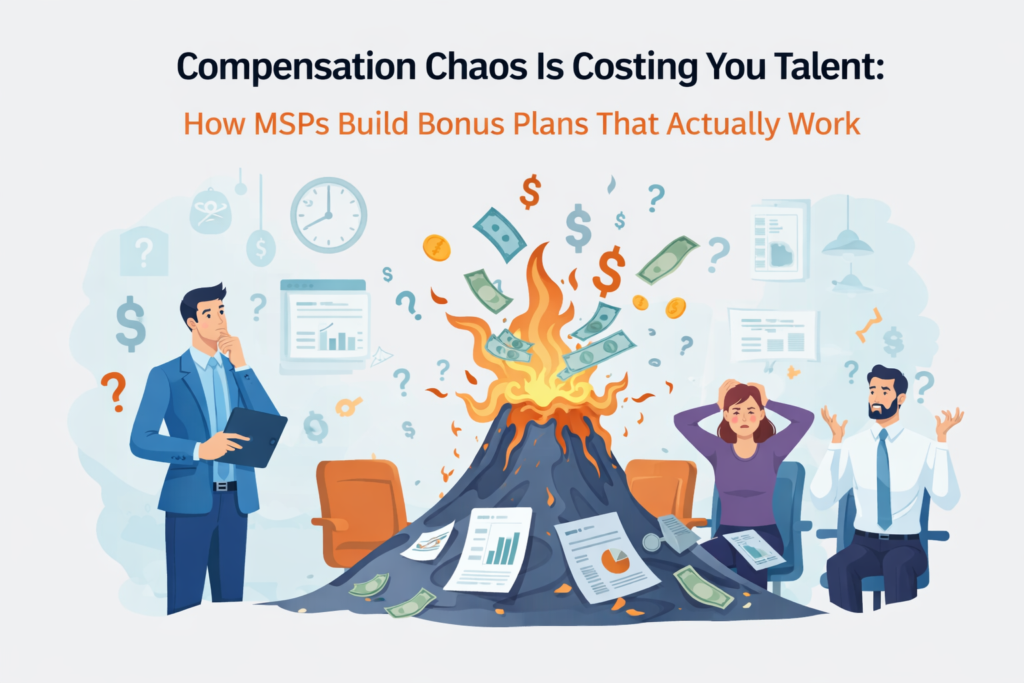
Compensation Chaos Is Costing You Talent: How MSPs Build Bonus Plans That Actually Work
For most MSPs, compensation is the largest controllable expense on the P&L. It’s also the most misunderstood. When compensation plans are unclear, misaligned, or copied…
Let’s Build the Right Financial Strategy Together
Tell us about your business, and we’ll guide you toward the best level of CFO and accounting support tailored to your growth stage.

Choose your starting point today and scale as your company grows.
Our team will reach out to discuss your needs and design a financial plan that works for you.
"*" indicates required fields